
About me
How I got here, in the order it happened.
Not a CV. The story behind everything else on this site, told as a life: ten chapters, and for each one the thing it left behind.
Scroll, or press the right arrow to turn the page.
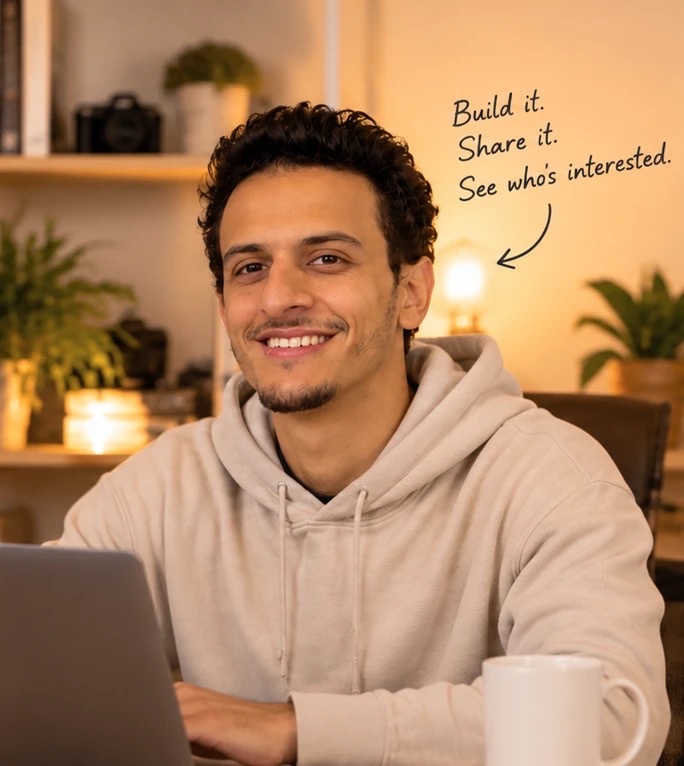
Chapter 1 · The engineer · 2015
I started by designing things that could not fall down.
Two and a half years as a structural engineer. A builder before software: the job was to make something people would trust without ever having to think about it.
That habit never left. I still check whether a bet will bear the load before I let anyone stand on it.
Margin noteA bridge is a promise to people who will never know who drew it.
Structural engineering. Three and a half years, a builder before software.
Chapter 2 · The turn
Then I noticed the problems.
Somewhere along the way I fell for technology and entrepreneurship, and found what I am actually good at: spotting problems in everyday life and solving them with technology.
Margin noteNoticing is the first act of service.
The moment
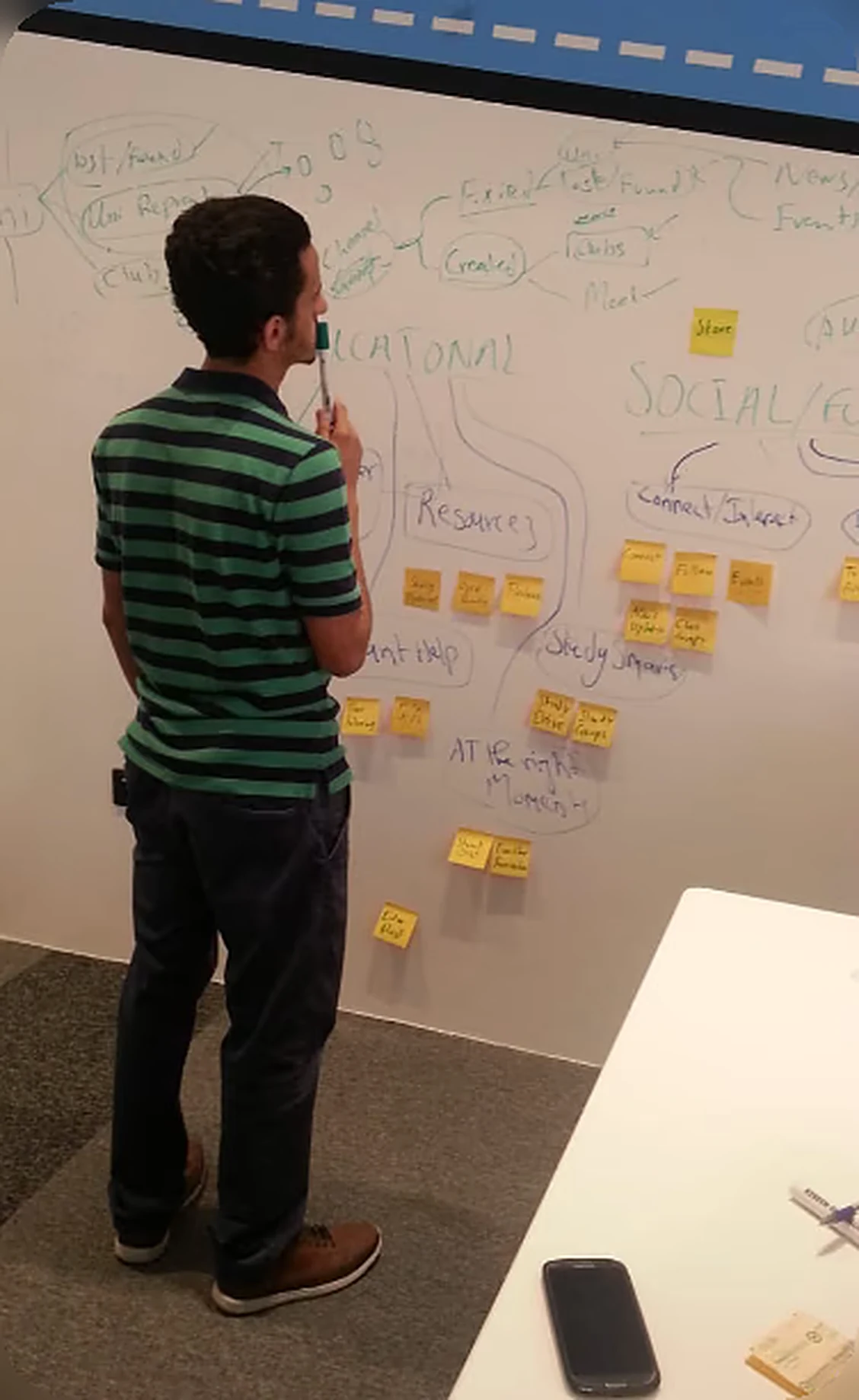
Chapter 3 · Mogz · 2016
My first startup failed.
I started an EduTech during my time in the American University of Sharjah called Mogz, a peer to peer teaching platform. Was part of the top 3 (from 100) startups with Shera'a and got some news spotlights.
It didn't work, and it taught me everything I now teach: "how to get to product-market fit".
Margin noteFailure is the first teacher. You either win or learn.
2016
Mogz
Founder. First startup. It failed, and taught me everything I now teach.
Chapter 4 · UAE startups · 2018
Then I joined the startup scene.
After Mogz I left engineering behind and joined a few startups across the region: growth manager at SchoolVoice, product manager at Expin, venture builder at GrowValley.
Three seats, three angles on the same question: what really gets early startups to market and how to nail product/market fit.
Margin noteYou don't learn startups by reading about them. You learn them by being short-staffed and rolling your sleeves.
Three startups, three seats
Growth manager
Helped them acquire more than 32 schools in 2 months.
Product manager
Built the product and helped get them to PMF.
Venture builder
Helped build 7 startups from the ground up.
Chapter 5 · StartHack · 2019
Then I turned my own struggles into a framework.
My struggles at Mogz, and the ones I watched inside startups across the region, kept pointing at one puzzle: how do you actually get to product-market fit? I stopped treating it as luck and started cracking it.
The result is StartHack Framework: 7 workbooks and 133+ canvases that take a startup from idea to PMF, in a practical, scientific, plug-n-play way.
Margin noteEvery canvas is a mistake I made so you don't have to.
StartHack Framework
7
workbooks
133+
canvases
From idea to product-market fit. Practical, scientific, plug-n-play.
See the frameworkChapter 6 · ClickUp · 2020
I learned scale from the inside.
I then moved to the US market. I pitched myself to the founder directly and he saw my passion towards SaaS and productivity apps. I, then joined as an early product manager helping ClickUp go from 32 people to 900+ and a $4B valuation.
I owned Custom Fields, Relationships, Whiteboard and the Task pages. I've learned the practical, scalable way of doing product management from the best in class.
Margin noteWe were hiring on avg. 6 new faces every day. I learned "adaptability" and "work under pressure" from the best.
Reaching a valuation of $4B in just 2 years.
Chapter 7 · Qawafel · 2022
Then I led an entire product team.
From product consultant, then Group PM, establishing strategy, and hiring the right team to get the company to $60M in GMV in just two years.
I built and hired three product squads from zero.
Margin noteLeading a product means empowering the people who build it.
$60M
GMV in two years, as Head of Product.
Three squads, built and hired from zero.
Chapter 8 · Salla · 2024
Then the whole company.
Joined as a Senior PM to help them kick-off a new product for merchants, the B2B sales channel. Built it and grew B2B merchant's GMV by +7% in 6 months. I then led the "First Experince" team improving Activation rate from 13% to 25%.
I then got prompted to Lead Product Strategist setting the product strategy for 13 squads, enforcing it using product operation systems and metrics and building an AI toolkit of 13 PM skills (GMV classifier, roadmap auditor, investigator).
Margin noteStrategy stays in paper if it's not well-defined, data-informed, cross-collaborated, and carefully governed.
Activation rate.
Plus a B2B sales channel: +7% B2B GMV in six months.
Chapter 9 · Misk · 2026 →
And I love making hard things practical.
I mentor founders at Misk LaunchPad and teach PM at Treford. Different rooms, same craft: taking a complex startup or product topic and making it practical enough to use the same day. A practice I'm skilled at and very passionate about.
It's consultation the way I like it: very practical, AI-powered, full of real case-studies, and, sometimes, done with you services.
Margin noteIf I can't make it practical, I don't understand it yet.
Stats so far
100+
mentoring sessions
30+
assignment evaluations
20
Saudi startups
6+
cohort masterclass
0→1 product strategy with founders: discovery, pricing, MVP scope and go-to-market.
Chapter 10 · Elden Studio · 2026 →
Now I build in public.
Elden Studio is where I build startups with AI, in public, audience first. Experiment №1 asks one question: can you build a startup with AI by raising an audience before raising money?
Every number shared, failures included.
Margin noteA lesson kept to yourself is a lesson wasted.










How to work with me
The short version of my user manual.
Inspired by Claire Hughes in the High Growth Handbook. It changes as I do.
Stay hungry, stay foolish
Comfort is the biggest threat to growth. I stay hungry to learn and foolish enough to challenge the status quo.
Direct, always
I share honest, constructive feedback straight away, and I appreciate the same from you. No sugar-coating, no hard feelings.
Believability, earned
I start by trusting you 100%. Believability is tracked per area and rebuilt by owning mistakes, not avoiding them.
Data-informed, not data-driven
If there is no data, go with your gut, then improve your gut with data.
Systems over willpower
I document and build processes for nearly everything. The best systems are flexible, never rigid.
Time is expensive
Async first. Meetings are 15–30 minutes with an agenda; book a slot in my calendar instead of asking when.